Conferences
The Society’s national and international conferences, from its inaugural meeting at NIMHANS in 2015 to the CNSI-2020 International Conference at the Gujarat Forensic Sciences University.
Next CNSI meeting: dates to be announced
The programme, venue and call for abstracts will be published here and sent to members. Leave your email to hear when they are.
Thank you. Your email app has opened with a request to add to the notification list. Send it and the Secretariat will write when dates are announced.
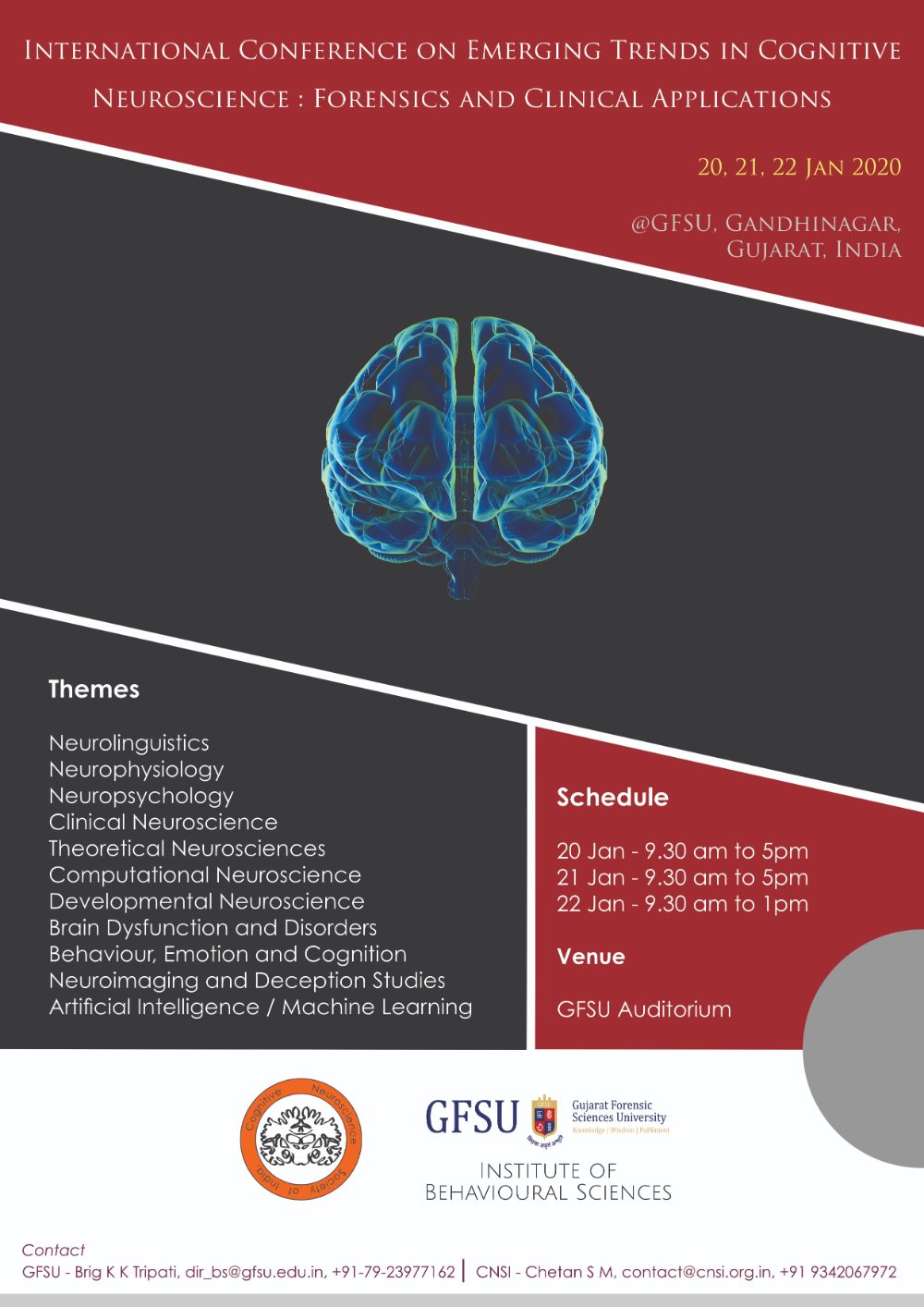
CNSI-2020 International Conference
20–22 January 2020, GFSU Auditorium, Gandhinagar
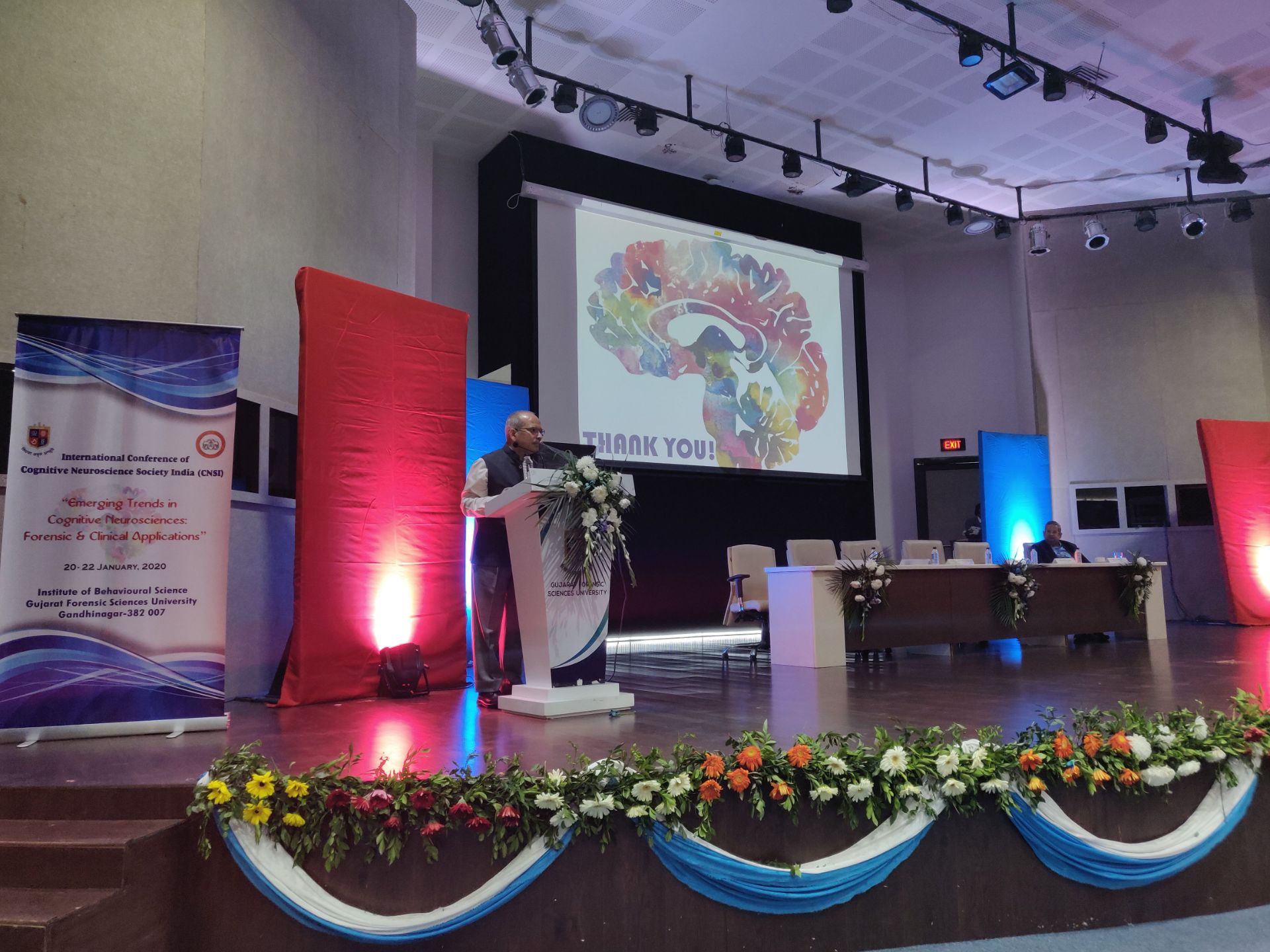
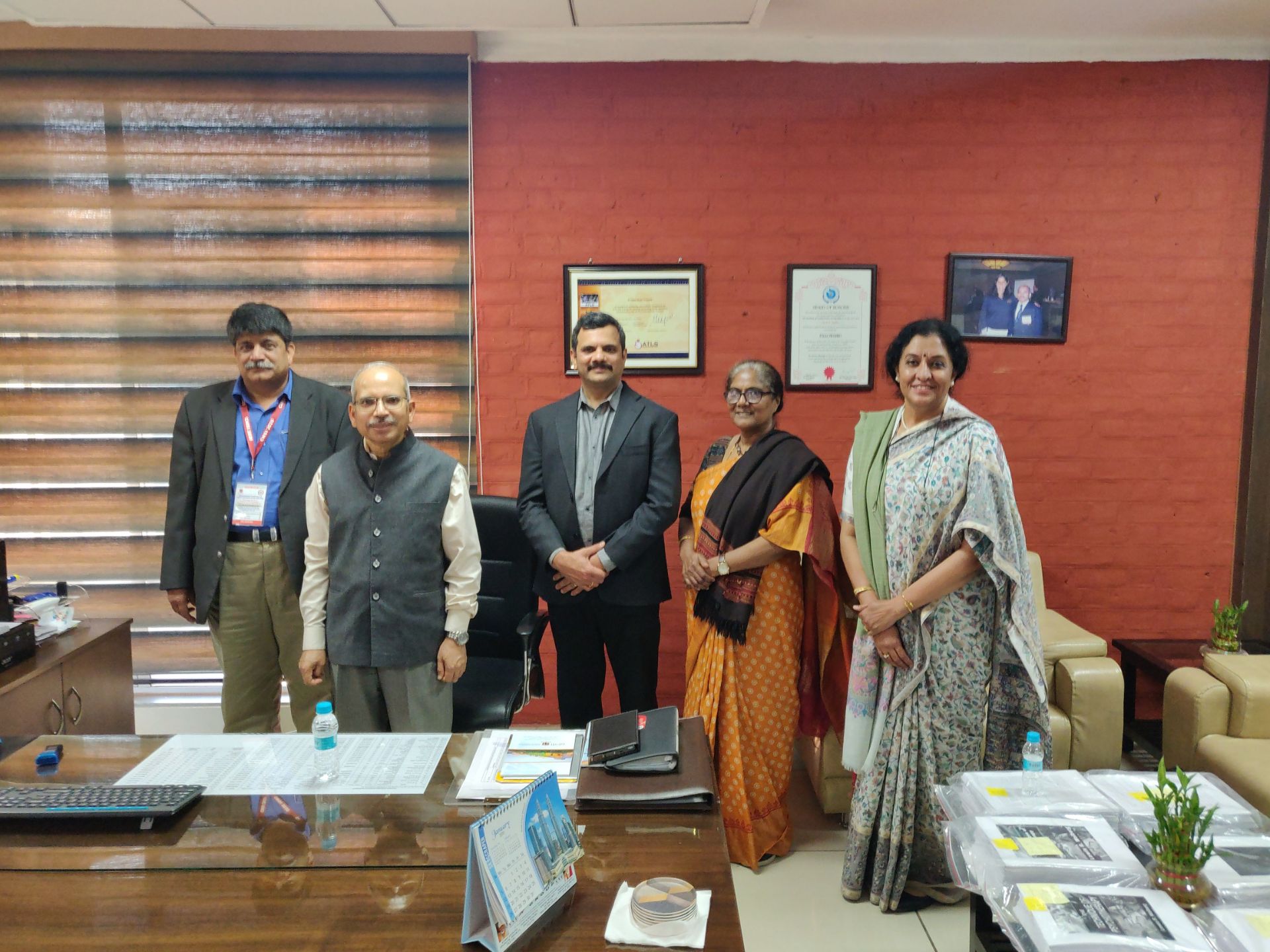
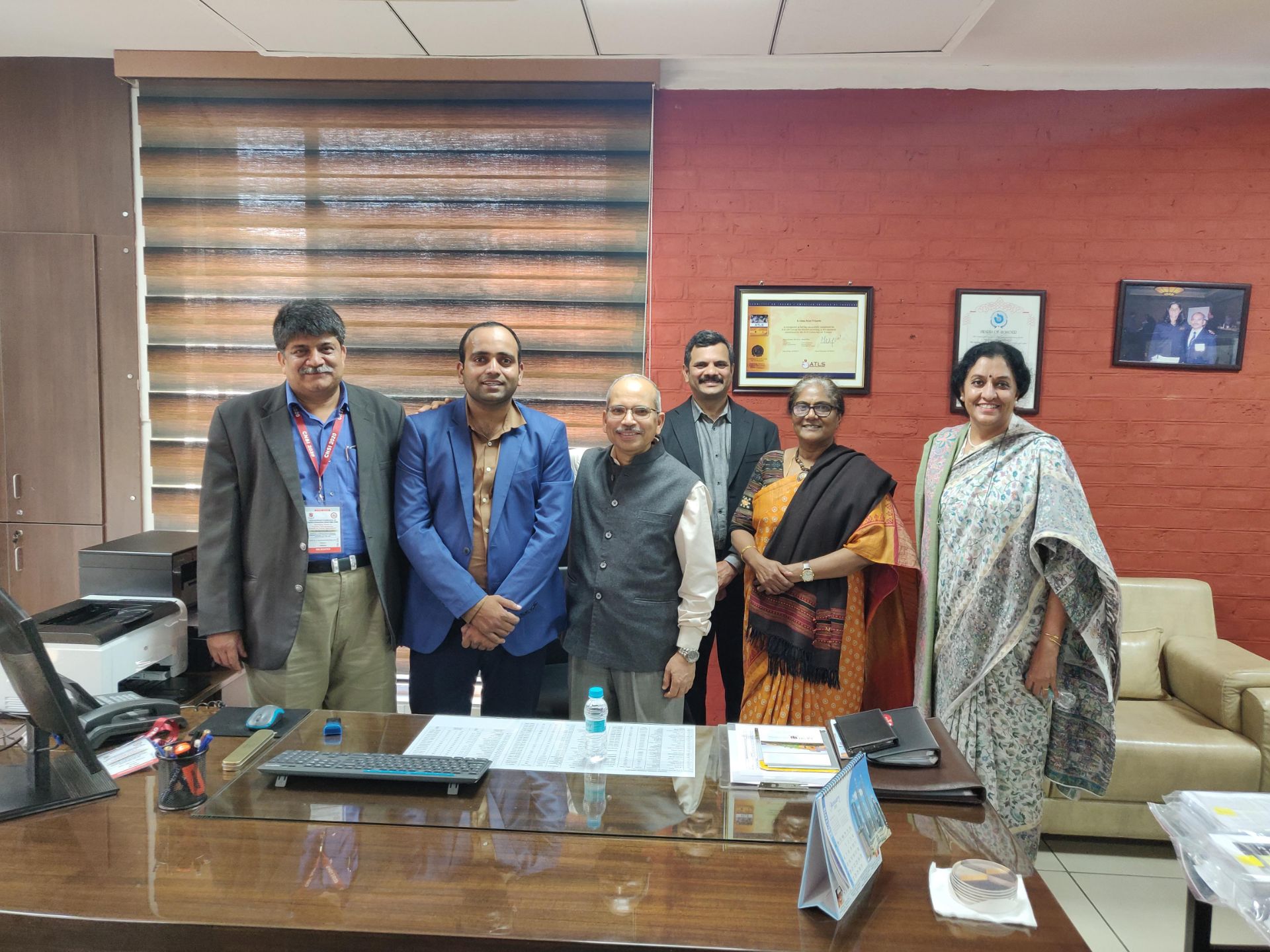
The International Conference on Emerging Trends in Cognitive Neuroscience: Forensics and Clinical Applications was hosted with the Institute of Behavioural Sciences, Gujarat Forensic Sciences University, and observed Forensic Psychology Day on 21 January.
Over three days it brought together a keynote, two plenary talks and sixteen invited talks, three special scientific sessions, a free paper session, two student award sessions and a poster session, closing with a workshop on EEG and ERP. Founder President Prof. C.R. Mukundan was felicitated at the inaugural session.
Themes
- Behaviour, emotion and cognition
- Theoretical and computational neurosciences
- Neuroimaging and deception studies
- Brain dysfunction and disorders
- Developmental neuroscience
- Neurophysiology
- Neurolinguistics
- Neuropsychology
- Clinical neuroscience
- Computation, artificial intelligence and machine learning in neurosciences
Keynote and plenary talks
- Prof. C.R. Mukundan, IBS, GFSU: “Cognitive modelling of neural controls and driving forces within the brain” (keynote)
- Prof. K. Ganapathy, Apollo Healthcare: “Neurosciences in 2030: a peep into the future”
- Prof. D.M. Pestonjee, Pandit Deendayal Petroleum University: “Stress and emotion”
Invited talks
| Speaker | Institution | Talk |
|---|---|---|
| Dr Sareen Galbraith | Leeds Beckett University | Development of “Clasp” sensor glove for management of neurological disease |
| Prof. B.S. Shankaranarayana Rao | NIMHANS | Neural plasticity: a tool to rewire and remodel neural circuits in neuropsychiatric disorders |
| Dr Kamlesh Jha | AIIMS, Patna | Sleep-related behaviours and human cognitive performance |
| Dr B.N. Srikumar | NIMHANS | Neurosteroids and cognition |
| Dr Ravindra P.N. | NIMHANS | Sleep and cognition |
| Dr Arun Sasidharan | Axxonet | Interfacing industrial and academic research in cognitive neuroscience |
| Mr. Chetan S. Mukundan | Axxonet | Applications of cognitive neurosciences in forensics: industry–academia collaboration perspectives |
| Dr Rakesh Balachander | NIOH | Influence of lifestyle factors on age-related cognitive decline: existing evidence |
| Dr Kaviraja Udupa | NIMHANS | Neuromodulation modalities in the treatment of neuropsychiatric disorders |
| Dr Avinash DeSouza | DeSouza Foundation | Neuropsychiatry |
| Prof. R.K. Mishra | University of Hyderabad | Language and cognition |
| Dr Arpan Banerjee | NBRC | Multi-scale representational space of cross-modal speech perception |
| Prof. Bindu M. Kutty | NIMHANS | Meditation, cognition and wellbeing |
| Prof. Ratna Sharma | AIIMS, Delhi | Neurocognition and neurocognitive disorders |
| Dr K.P. Miyapuram | IIT Gandhinagar | Artificial intelligence approaches for early detection of Alzheimer’s disease |
| Dr Shyam Diwakar | Amrita University | Computational neuroscience and neurological conditions |
Programme by day
- Monday 20 January
- The keynote and two plenaries; sessions on computational and artificial intelligence, behaviour, emotion and cognition, neurophysiology, and technology and cognitive neuroscience; the inaugural session with the felicitation of Prof. C.R. Mukundan.
- Tuesday 21 January
- Sessions on clinical neurosciences, neurolinguistics, theoretical and computational neuroscience, and neuropsychology and cognition; the observance of Forensic Psychology Day; a special scientific session; two student award sessions and the posters.
- Wednesday 22 January
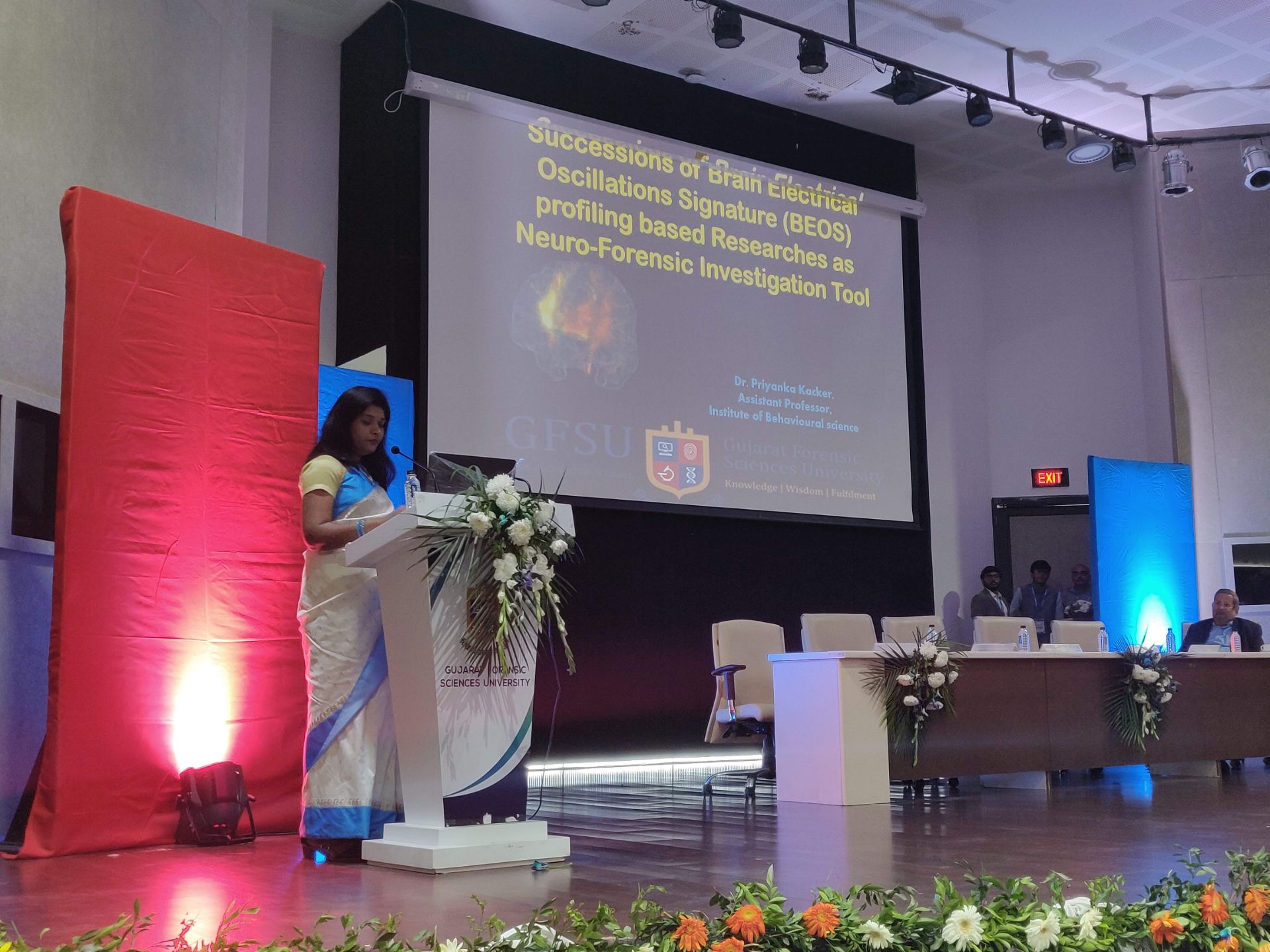
- Theoretical and computational neuroscience; a free paper session; two special scientific sessions, including work on BEOS and the polygraph in deception detection; the valedictory function with the Best Student Paper Award; a workshop on EEG and ERP.
Photographs from the final day
22 January 2020, GFSU (now the National Forensic Sciences University), Gandhinagar
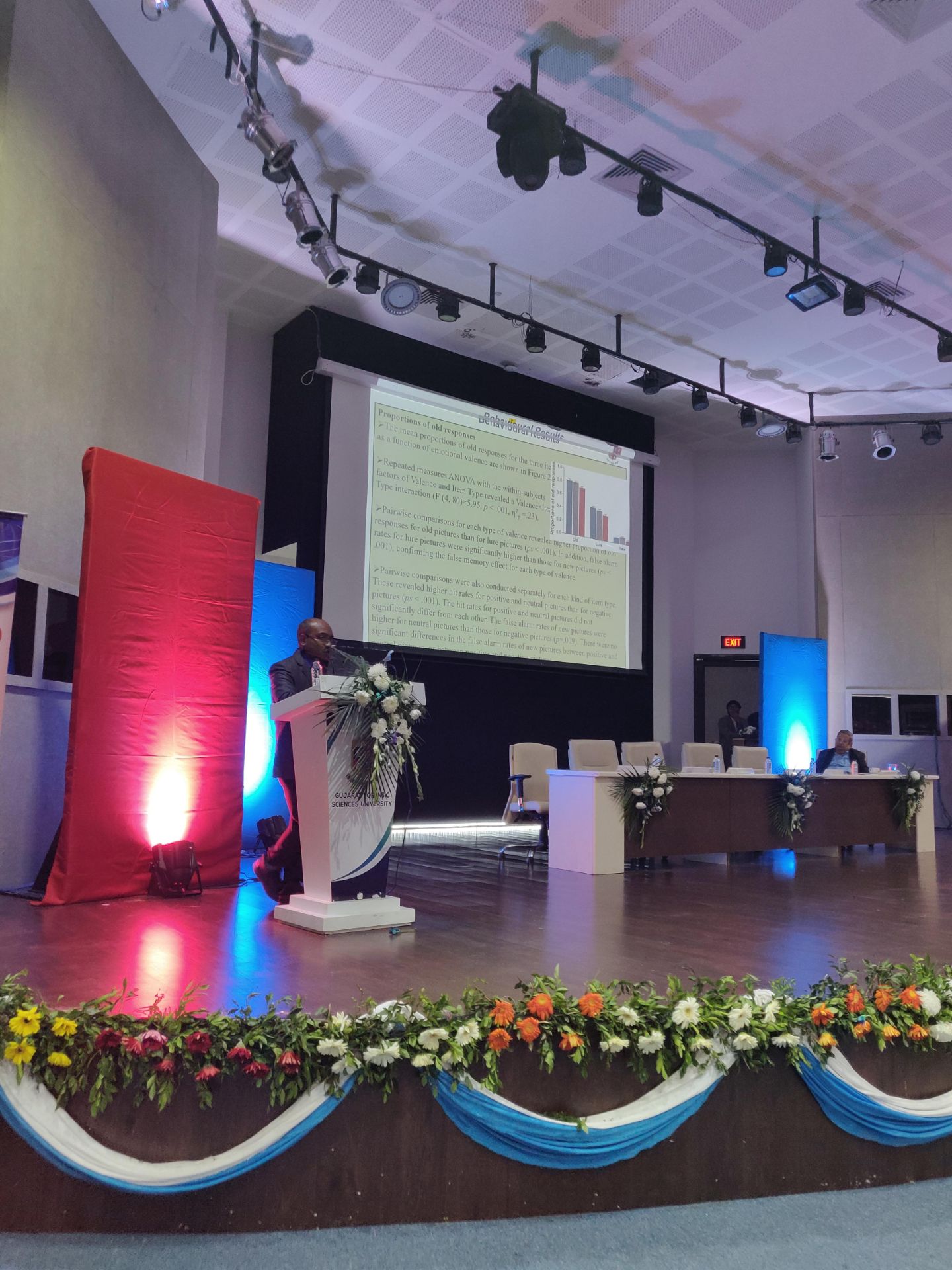
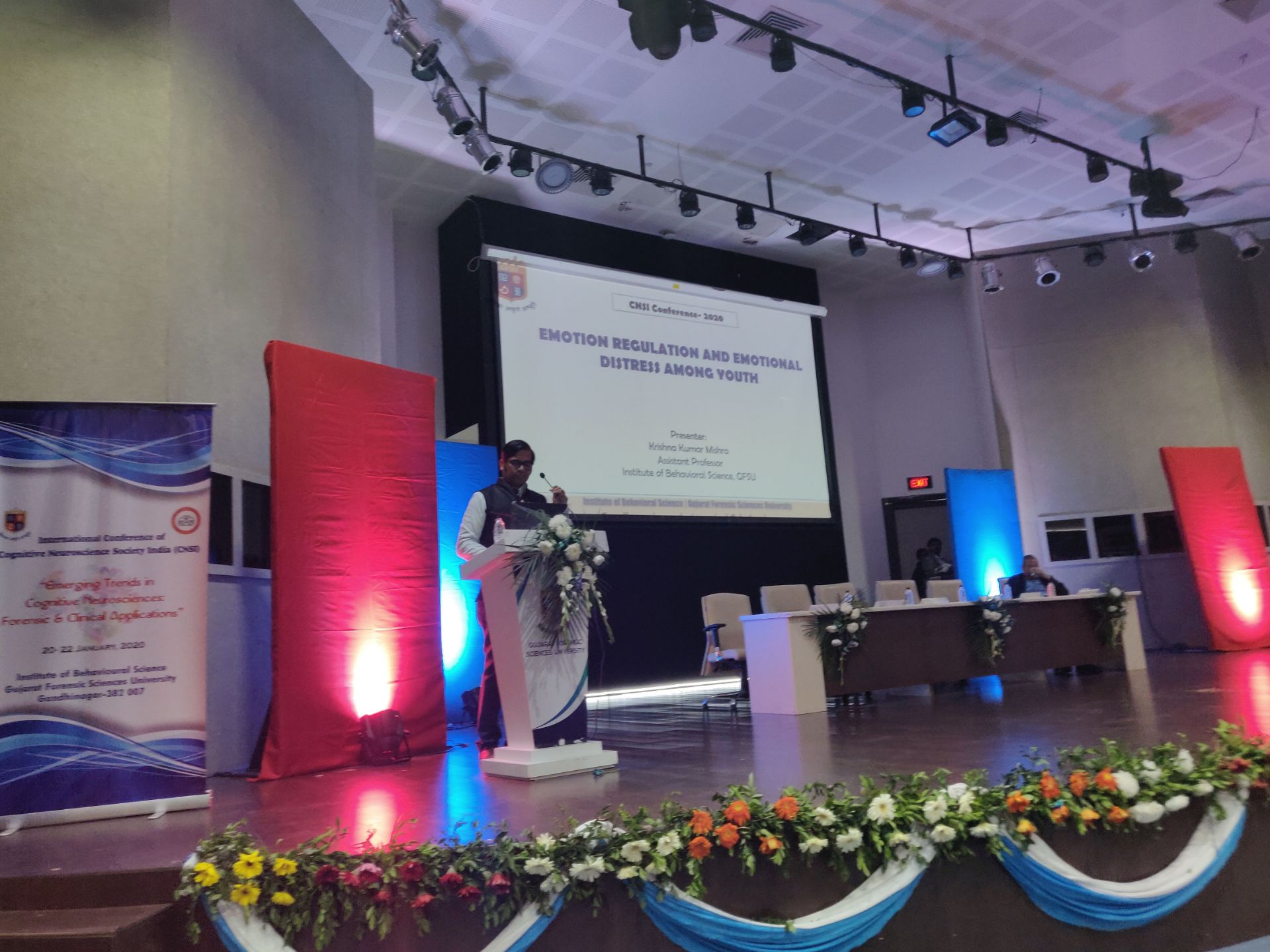
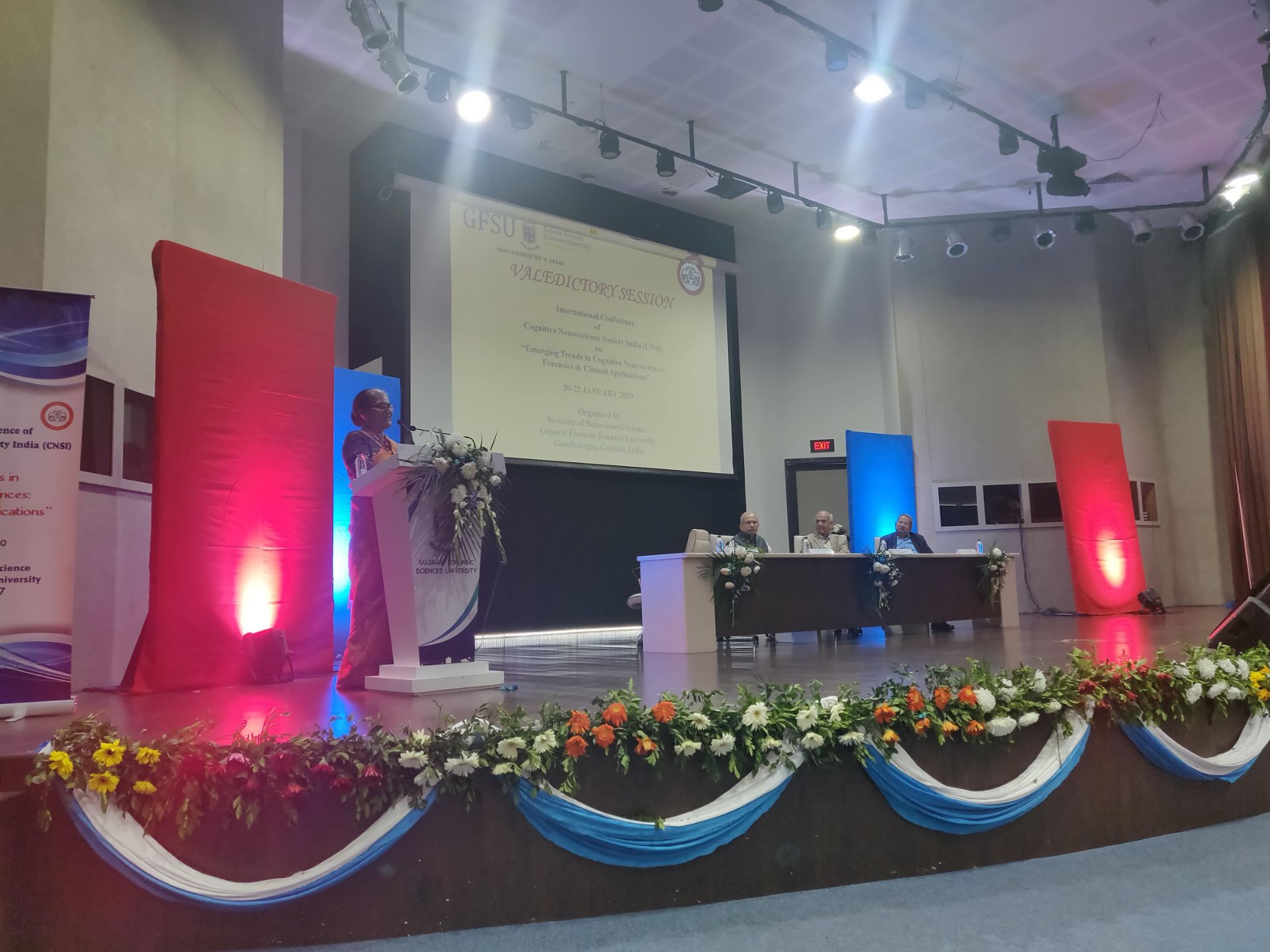
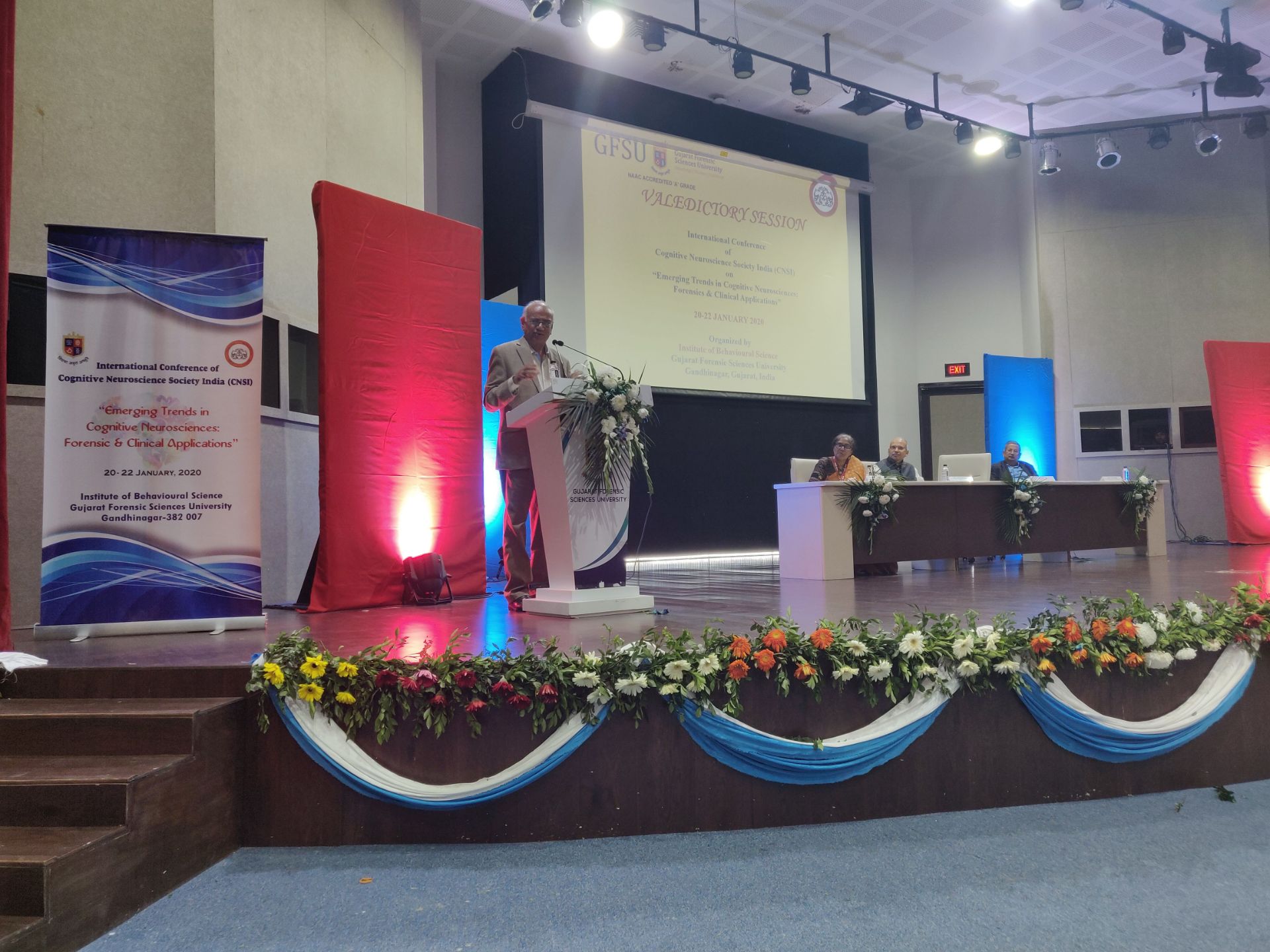
1st National Conference of CNSI, 2016
4–5 April 2016, GFSU Auditorium, Sector 9, Gandhinagar
The Society’s first national conference took the theme “Envisioning the BrainMind: A Multidisciplinary Approach”. It was organised by the Institute of Behavioural Science, GFSU, with the support of the Social Justice and Empowerment Department, the Gujarat State Child Protection Society and UNICEF.
Prof. B.N. Gangadhar, Vice-Chancellor and Director of NIMHANS, and Dr J.M. Vyas, Director General of GFSU, inaugurated the conference at 10:30 am on 4 April. Dr Priyanka Kacker was Organising Secretary, and Prof. C.R. Mukundan was President of CNSI.
Eighteen keynote addresses over two days ranged from children in the juvenile justice system and autism to prospective memory, brain nutrients, schizophrenia, addiction, violence, cognitive neurology and BEOS, followed by research paper presentations and the valediction.
Keynote addresses
| Session | Speaker | Address |
|---|---|---|
| 4 April, morning | Prof. Shekhar Seshadri, NIMHANS | Emotional and behavioural issues in children under the Juvenile Justice System |
| 4 April, morning | Dr Shripathi Upadhyaya, United Kingdom | Autism spectrum disorders and neurocognition |
| 4 April, morning | Ms. Mayuri Raghuvanshi, Advocate, Supreme Court, New Delhi | Issues for consideration while forming juvenile laws in India |
| 4 April, morning | Dr B.N. Roopesh, NIMHANS | Development of executive functions in children |
| 4 April, afternoon | Prof. John P. John, NIMHANS | Prospective memory |
| 4 April, afternoon | Prof. Kiranmai S. Rai, MMMC, Manipal University | Role of essential brain nutrients to sustain neurocognitive development, despite early life stressors |
| 4 April, afternoon | Prof. Uday Sinha, IBHAS, New Delhi | Applied cognitive neuroscience in Indian schools: mental health perspective |
| 4 April, afternoon | Dr Jyotik Bhachech, Safalya Psychiatry and EEG Clinic, Ahmedabad | Social media use and its psychological impact on people |
| 4 April, afternoon | Prof. Unnikrishnan M., Manipal University | Evolutionary psychology |
| 5 April, morning | Prof. Prabha Adhikari, Manipal University | Effect of BP normalisation on mild cognitive impairment |
| 5 April, morning | Prof. Suvarna Alladi, NIMHANS | Language and culture in cognitive neurology |
| 5 April, morning | Prof. P. Jena, University of Delhi | Inhibitory control and error processing in addictive behaviour: neurocognitive perspective |
| 5 April, morning | Dr Arun Sasidharan, Ajay Kumar Nair, John P. John and Bindu M. Kutty, NIMHANS | Simultaneous assessment of P50, MMN, ERN and P300 event-related potentials among patients with schizophrenia: an exploratory study |
| 5 April, morning | Mr. Ashish Jain, ONGC, New Delhi | Vigilance: inoculating the organisation |
| 5 April, midday | Dr Shweta Singh, KGM University, Lucknow | Home-based cognitive retraining in patients with schizophrenia: Uttar Pradesh experience |
| 5 April, midday | Dr Deepa Mohan, GITAM University, Visakhapatnam | Neurobiology of violence |
| 5 April, afternoon | Dr Priyanka Kacker, IBS, GFSU | Assessment of neurocognitive processes by Brain Electrical Oscillations Signature Profiling (BEOS) |
| 5 April, afternoon | Prof. C.R. Mukundan, IBS, GFSU | Emotional arousal: new proposals |
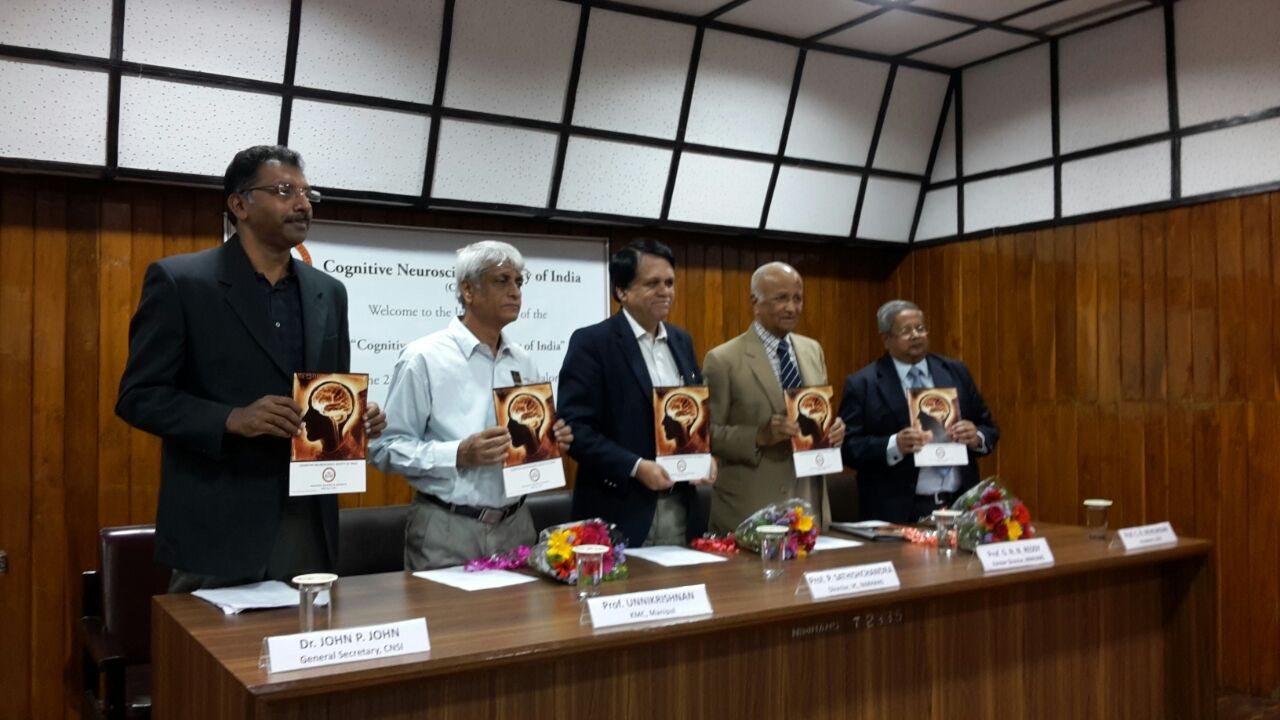
Inaugural meeting, 2015
21 June 2015, NIMHANS, Bengaluru
The Society was inaugurated at NIMHANS by Prof. P. Satishchandra, Director and Vice-Chancellor, and its Inaugural Souvenir and Abstracts was released by Prof. G.N.N. Reddy, former Director of NIMHANS.
Talks through the day spanned Sri Aurobindo’s philosophy of mind, glial cells, consciousness and self, evolutionary psychology, blood pressure and cognition, hypnosis, meditation and neurogenesis, the linguistic brain and cognitive reserve, by speakers from NIMHANS, Manipal, Calicut, NIAS and GFSU.
Members can convene conferences, workshops and CME programmes under the CNSI umbrella
Propose a meeting or a Core Interest Group session to the Executive Committee.
Propose an event