A scientific society for the brain–mind domain
The Cognitive Neuroscience Society of India (CNSI) brings together the clinicians, academicians and technologists who study, research and practise in the brain–mind areas, so that the understanding emerging from each discipline can inform all the others.
Founded at NIMHANS, built across India
CNSI grew out of a shared conviction among neuroscientists, clinical psychologists, neurologists, psychiatrists and engineers that the brain and the mind can only be understood together, through integrated, multidisciplinary work. Led by Prof. C.R. Mukundan, who established clinical neuropsychology and cognitive electrophysiology at NIMHANS, the founding group registered the Society in Bengaluru under the Karnataka Societies Registration Act, 1960.
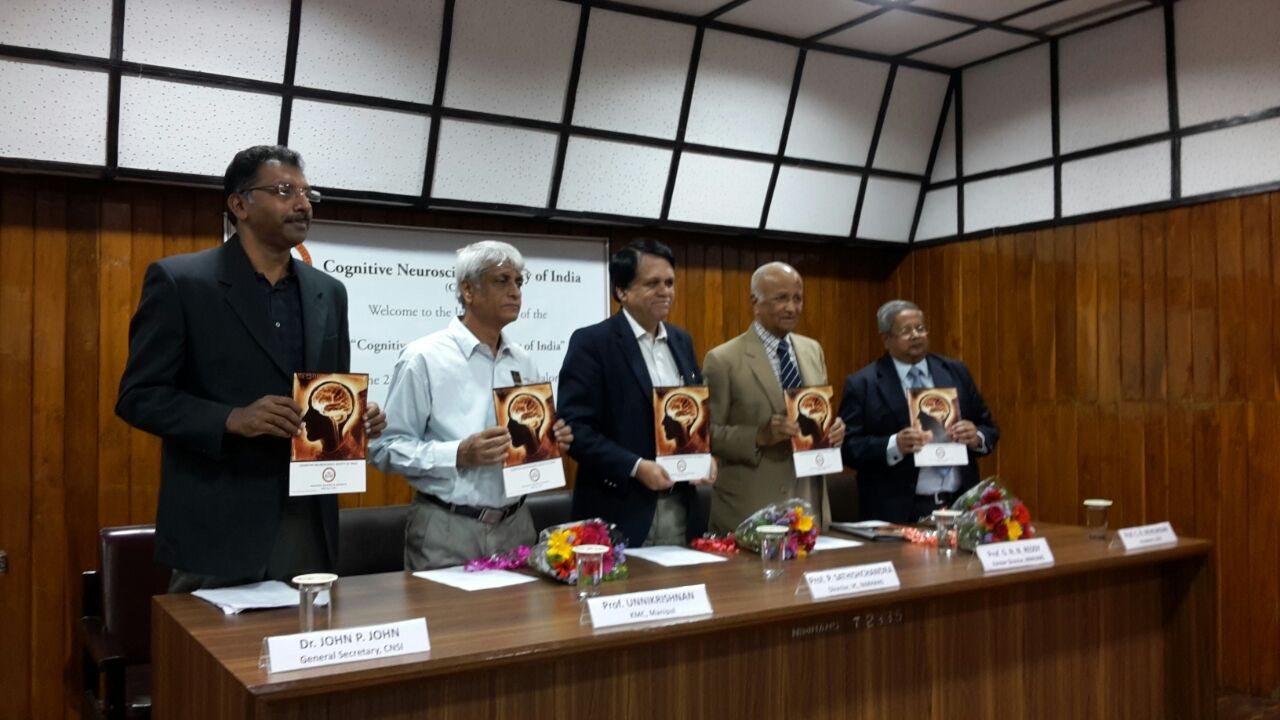
The Society was inaugurated on 21 June 2015 at NIMHANS by Prof. P. Satishchandra, Director and Vice-Chancellor. Its eighteen founding committee members came from NIMHANS, Kasturba Medical College Manipal, the Gujarat Forensic Sciences University, Banaras Hindu University, AIIMS New Delhi, NIMS Hyderabad, Nitte University and Axxonet.
What the Society sets out to promote
The Memorandum of Society lists seven objectives, from understanding the effects of brain lesions and interventions to neurocognitive technology, forensic neuropsychology, training, and travel grants for students.
The work draws on fourteen disciplines, from neurophysiology, neurology and neuropsychology to language and speech, neurocomputing, meditation and sleep.
How the Society is run
Primary Members elect an Executive Committee once in two years, the General Body meets every year to approve the accounts and the budget, and the financial year runs from 1 April to 31 March.
Members also work in Core Interest Groups, each with a Chairperson appointed by the Executive Committee, in areas from clinical and geriatric neuropsychology to sleep, meditation and cognitive electrophysiology.
Who leads the Society
Prof. Bindu M. Kutty is President, Prof. B.S. Shankaranarayana Rao is General Secretary and Mr. Chetan S. Mukundan is Treasurer, with Prof. C.R. Mukundan as Founder and Honorary President.
Emblem
A coronal brain section within an orange ring carrying the Society's name. For use on programmes, certificates and presentations of Society events; please do not recolour or distort it.
Download emblem (PNG)